How To Remove Tree Stump With Epsom Salt
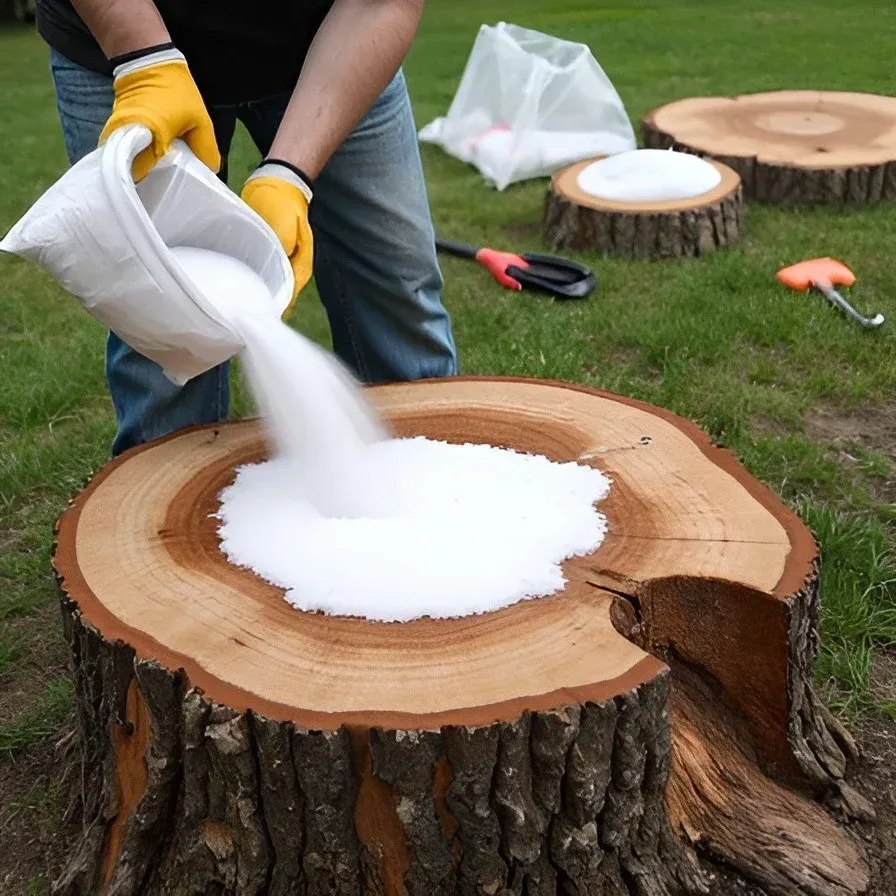
You may be curious how to get rid of a tree stump if you have one in your home. Because tree stumps can damage the beauty of the lawn, and they can even survive and create difficulties in the future. Epsom salts are a simple and cost-effective technique to remove a stump, but how could this common home product be used in tree stump removal?
There are several ways to utilize Epsom salt to remove a tree stump, and which one you apply will mostly rely on if you have and can use a drill.
Here’re the 2 different ways of removing tree stump with Epsom salt:
Drilling Method- Soaking Method
Drilling Method
- Drill a few holes into the stump with a 1-inch drill bit, keeping a few inches between every hole. Drill as profoundly as you can; holes must be at least 8 inches deep.
- Fill the drilled holes to the top with Epsom salt.
- Fill the holes with sufficient water to soften the salt. Gradually pour in the salt so that it does not spill.
- Based on the time of year, you may have to cover the stump with a sheet. This will keep rainfall from flooding the holes and depleting the Epsom salts excessively.
- Do the procedure every 3 weeks till the stump dies. Pale wood is usually still alive, whereas dark and brittle wood is dead.
Soaking Method
- Combine Epsom salts and water in a one-to-two proportion of Epsom salts to the water. The optimal amount for every stump soak is one gallon of salts plus two gallons of water.
- Using a brush, saturate the stump and any visible roots with the solution.
- Protect the stump with a sheet and soak it once a week till the stump is clearly dry.
Whatever method you choose, the stump will eventually dry up and decompose, although that may take some months (8 to 10 weeks).
When a stump dies, it decomposes naturally, but you can speed up the process by applying high nitrogen fertilizer at the base of the stump. However, a decaying stump can be easily dug up and disposed of.
You can then replace the hole using soil and plant it, or you can make a fresh flower bed in its stead. Another advantage of using Epsom salt to destroy a stump is that it leaves the nearby soil in better condition than other chemical solutions.
Conclusion
By dehydrating out the roots and leftover trunk stump, Epsom salts remove a tree stump. They are a great choice for removing tree stumps in several settings, particularly if you need a safe and non-physically demanding DIY solution.
Epsom salts offer a low-cost, simple, and environment-friendly remedy for tree stump removal. The only disadvantage of utilizing Epsom salts to remove a tree stump is it can take an extensive amount of time compared with other options.
If you don't mind waiting several months for Epsom salts to dry up in your tree stump, this will be the best solution for you! Visit our
home page for the best
Oahu tree removal experts around!